Where Imagination Meets Enlightenment: Explore the World Through Books.
Published Book
Watch my Book Trailer






Jody Riddle
Was born on May 16, 1955 in Kentucky to James Edward Nivin and Ann Marie Nivin. Raised in Tell City, IN and Louisville, KY. Was very active as a child, Dance and Music,: Piano, Violin, Guitar. Became a Registered Nurse and worked carying jobs.
Married to high school sweetheart, Barry Alton Riddle, had 3 children by him Derek Alton, Sean Nivin, & Jacqueline Marie. Traveled for Military and enjoyed it. We all loved to travel. We settled in Newburgh, IN nest to the Ohio River. I enjoyed working on my grandfather’s Novel. I hope you all enjoy reading it..
Read More
Married to high school sweetheart, Barry Alton Riddle, had 3 children by him Derek Alton, Sean Nivin, & Jacqueline Marie. Traveled for Military and enjoyed it. We all loved to travel. We settled in Newburgh, IN nest to the Ohio River. I enjoyed working on my grandfather’s Novel. I hope you all enjoy reading it..
Watch my Book Interviews
Spotlight Interview with Jody A. Riddle
Video Interview with Jody A. Riddle
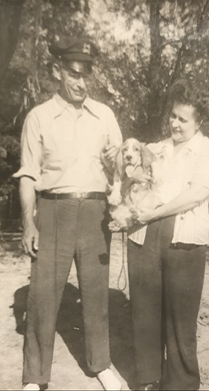
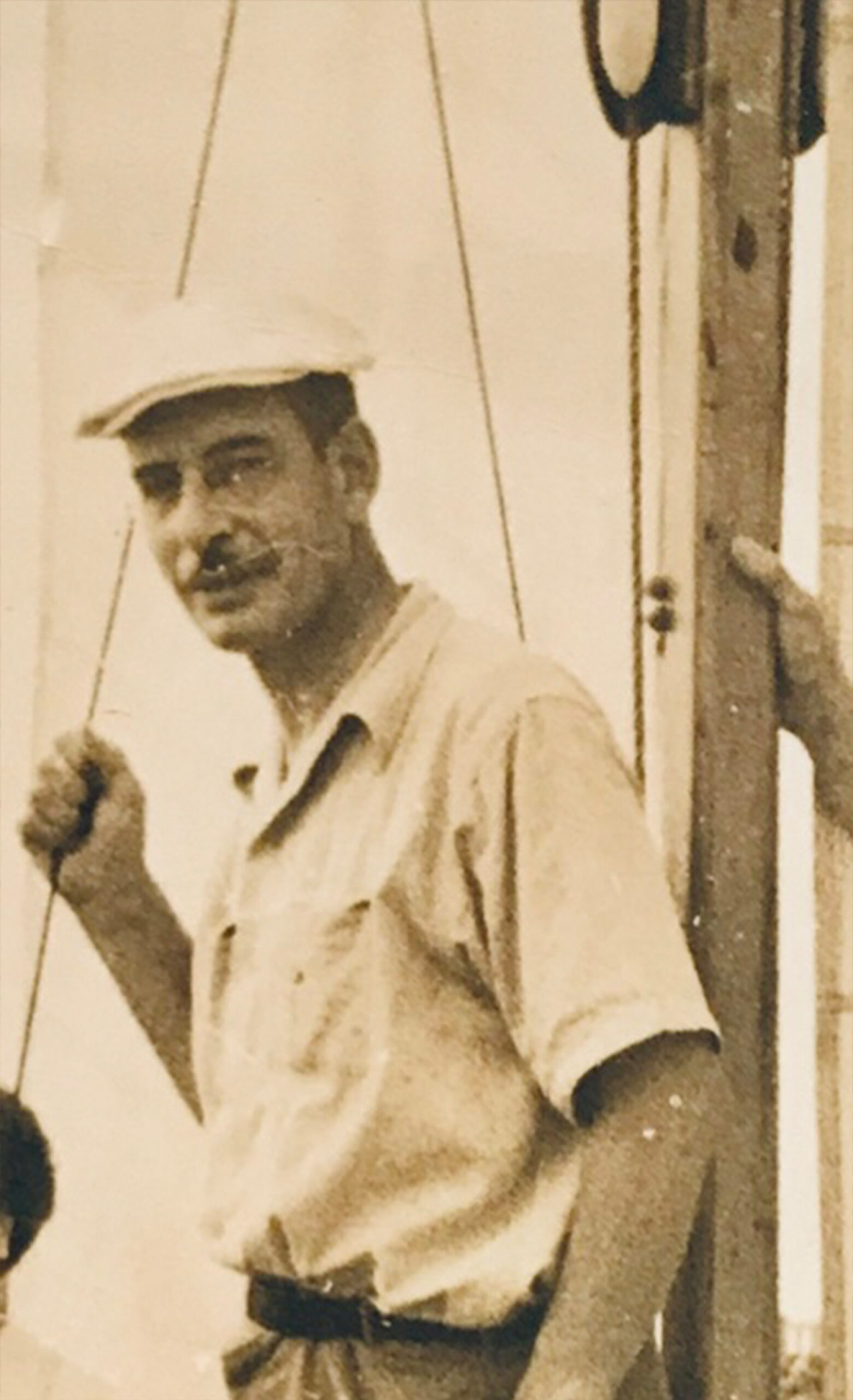
William Winchester Nivin
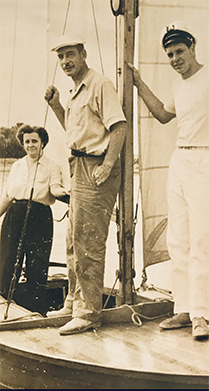
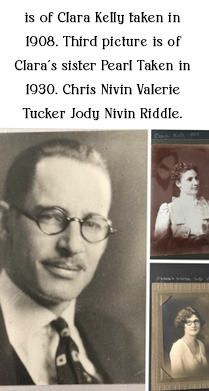
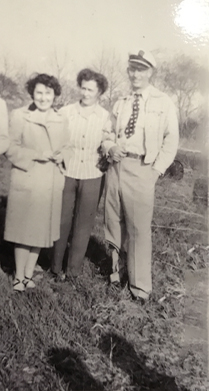
Was born on 12-22-1893 in Bunker Hill, IL, was an only child raised in southern Illinois. He married Clara Kelly, had three children, and later married Dewella M. Wilhelm, with whom he had a son named James Edward.
William, fascinated by war storues from his grandparents, was an avid reader and even invented the dash-key. In his free time, he started a novel about the pre-Civil War era but couldn’t finish it before his untimely death. Years later, his granddaughter found the manuscript, recognizing his desire to publish it. After years of work, she successfully prepared it for publication.
What Reader's Say
Readers Testimonials
Book Reviews


THE SIN OF ANGELS
Reviewed by: Subhrajit Saha
Life goes on! That’s exactly what came to mind as I turned the final page of William Winchester Nivin’s & Jody Riddle period drama The Sin of Angels. This sprawling novel, with over five hundred pages, feels like a wholesome feast brimming with diverse flavors – joy, sorrow, anger, romance, disgust, awkwardness, and more. Despite its length, it never drags nor feels monotonous. Instead, the constant flux of events and the appearance of hundreds of characters might occasionally feel overwhelming, yet it keeps the intrigue alive. The narrative masterfully stirs a relentless curiosity, compelling readers to chase after what’s coming next.
Set against the backdrop of the 1850s United States, the novel delves into a politically charged era where society finds itself divided over the abolition of slavery. While one faction raises its voice to dismantle the oppressive system, others vehemently oppose it. Some present well-reasoned arguments for their stance, while others blindly cling to old traditions, perpetuating the exploitation of human beings as it had been for generations. The Marquands are a well-established and influential family in the state of Kentucky. Bertrand Marquand, the patriarch, is a seasoned lawyer and politician. The twin brothers of the family, Edward and John, share nothing in common apart from their appearance. Edward is well-mannered, educated, and deeply empathetic, whereas John is the complete opposite – a spoiled brat and a mama’s boy with empathy for anyone. Ruthless in his pursuit of personal desires, John seems to embody every negative trait imaginable, as if the almighty had poured every possible vice into one person.
From attempting to kill his cousin Allen to expressing a disturbing desire for Edward’s girlfriend, betraying his own partner, and committing financial fraud, John remains a constant troublemaker throughout his life. In stark contrast, Edward, much like their father, embodies the role of a family man, striving to protect everyone and maintain balance amidst the chaos. As John’s storyline grows darker and more twisted, Edward’s journey becomes increasingly vibrant and compelling. The novel is filled with moments that evoke a whirlwind of emotions – confusion, bliss, and rage – particularly in subplots involving Edward’s dynamics with Sally, Shirley, and Mary. The real concern lies in whether Edward and John, despite being part of the same family, can coexist. This raises a critical question: how will the Marquand family and the other characters withstand the chaos brought on by such a disruptive personality? Moreover, what role will Edward, John’s twin, play in preventing him from tearing their family apart?
A narrative like ‘The Sin of Angels’ demands well-developed character writing alongside an eventful plot to keep the audience hooked. Fully aware of this, the author skillfully incorporates a range of fascinating side characters, adding depth and vibrancy to the story, making the narrative all the more engaging. Though the narrative, centered around the Marquand brothers, despite that, it is enriched by a host of intriguing characters. Among them, Shirley Owen stands out with the most compelling arc in Nivin’s novel. Initially introduced as a stubborn child of the Owen family, Shirley’s transformation throughout the story is bound to captivate readers and make them fall in love with her character. Then there’s Anne Ridgeway, a one-dimensional lover who evokes both pity and frustration with her actions. The cast also includes Bob Abbington, who evolves from a brash figure to a tender lover boy, the archetypal mother figure in Dorothy Marquand, and the shrewd, calculating Bertrand – all of whom contribute to making this story even more engaging.
With its captivating political setting, well-fleshed characters, and engaging narration, William Winchester Nivin’s novel is a must-read for anyone seeking a compelling addition to the historical fiction genre.

THE SIN OF ANGELS
Reviewed by: Haley Koth
“One thing you haven t learned is that there’ a price tag on everything in this world. No, don t misunderstand me, I don’t mean that everything may be bought. I mean that for every misdeed you perform, a price must be paid, either by you or by someone else.”
This sweeping historical novel centers around the lives, loves, and losses of the twin Marquard brothers—stalwart Edward and troublesome John. Their tale begins with the boys coming of age in the 1850s, as they immediately entrench themselves in hot water following a violent fight over their father’s servant. As punishment, their father puts them to work with his logging operation, during which time Edward learns the value of good, honest work, and John learns the danger of involving himself with a married woman.
After one of John’s malicious pranks comes to light, his father sends him away to West Point. Meanwhile, Edward falls in love with two women, leading to a difficult choice that brings momentary happiness until tragedy strikes his household. John moves up the ranks in the army while burying himself in gambling, duels, an illicit affair that leads to deadly consequences, and a deep illegal scheme from which Edward goes to great lengths to bail him out. From then on, the twins lead vastly different lives, and the choices they make change those lives’ trajectories.
This is a memorable, far-reaching portrait of one family’s growth during the turbulent times of Civil War America. Edward and John’s stories illustrate how the consequences of a person’s actions create ripple effects through their family and community. Despite its nearly 600-page length, the novel remains engaging throughout. Readers will be delighted to follow the twists and turns of the Marquard lives while immersing themselves in the exposition of a family in the mid-1800s. This lively, engrossing, and heartfelt novel will keep readers hooked all the way through to the surprising end.

THE SIN OF ANGELS
Rating: 4
The Sin of Angels is a big, old-school historical saga that follows the Marquand family from an 1850 Kentucky slaveholding farm into the chaos of the frontier and the coming Civil War. It starts with a brutal little powder keg in a barn loft, where Edward’s secret relationship with the enslaved Sally explodes into violence with his twin brother John, and it keeps widening from there into logging camps, army posts, political halls and battle clouds. The book tracks how these men and the people around them stumble through slavery, war, ambition and love, and it keeps circling the same hard question. What does it cost a person and a family to live comfortably inside a system that is rotten at the core?
The narrative voice is smooth and clear. It reads like a classic twentieth-century historical novel, not a modern minimalist thing. Scenes like the opening in the hayloft or John’s fight for his life during the Indian attack are vivid and easy to picture. The action is staged cleanly, the stakes are obvious, and the dialogue has a plain, almost theatrical rhythm. I found myself turning pages because I wanted to see how far John would fall, whether Edward would ever really face what he had done, and how characters like Allen, Sally, and Matilda would get out from under the damage the twins leave behind. The book is long, and it sometimes lingers on exposition and political detail. There are stretches, especially in the sections about secession politics and militia organization, where I felt the energy slow, but I understand that the information matters to the bigger picture.
The writers do not hide how ugly slavery is, yet they stay very close to the white family’s point of view. Sally’s early scenes are electric and painful, and Matilda’s story has real weight, but they still mostly appear as part of the Marquands’ moral journey. I also enjoyed the romantic beats in the later chapters, especially Bob and Shirley’s storyline. Parts of it are genuinely sweet and give some welcome breathing room from all the violence and scheming, and at a few points the tone leans toward melodrama. I enjoyed the big emotions and how neatly some of the turns play out. The last act left me with that heavy, restless feeling a family epic should give. People live, love, hurt one another, and history keeps grinding on.
The authors press hard on responsibility. Not just the obvious villains, but also the charming, clever, “good” people who benefit from bondage and then from war. John’s story, in particular, shows how charm and talent can curdle into cruelty when no one tells you no soon enough. The book also digs into how a border state like Kentucky tried to stand apart while being pulled in two directions, and that tension feeds the family drama in a satisfying way.
I would recommend The Sin of Angels to readers who enjoy long, character-driven historical novels set around the Civil War and the antebellum South, and who are comfortable sitting with both moral discomfort and old-fashioned storytelling. If you like sprawling family sagas, clear scene work, and a mix of frontier action, politics, and romance, this will hit the spot. The Sin of Angels is an emotionally stirring novel, and I think that blend will appeal to a lot of history-minded fiction readers.

THE SIN OF ANGELS
Reviewed by: Jack Chambers
In the grand scheme of things, love and romance have been two things which have driven some of the world’s greatest stories. Whether it is a Greek tragedy like The Odyssey or a classic Shakespearean play like Romeo & Juliet, romance encompasses so many aspects of life, from tragedy and loss to triumph and joy. The star-crossed lovers’ trope is one of the literary world’s oldest tropes, and yet it speaks to the nature of humanity to take control of who can love one another and who can’t, and highlights man’s desire to break those social constructs and flip them on their heads.
From a historical point of view, authors William Winchester Nivin and Jody Riddle’s The Sin of Angels answers this idea of star crossed lovers from a nineteenth century perspective. The story follows Edward and Sally, two young people in love who come from very different walks of life. In this era of history, Edward is a headstrong young man who falls for Sally, who tragically is one of his father’s slaves on their Illinois farm. Both fear discovery of their love for one another, but they cannot keep apart, and soon their romance is discovered by John, Edward’s manipulative brother, who uses the knowledge to leverage himself against his brother. Can the two lovers find a way of staying safe and being together, or will the world tear them apart?
A powerful and compelling narrative, the authors really lean into the era of history and bring it to life through powerful imagery in the writing which makes the readers feel like they stepped directly into the Midwest farmland where this story takes place. The visceral emotions of the narrative are powerfully felt in this story, from the nearly deadly and vicious relationship between Edward and his brother John, to the level of passion and love Edward has for Sally, and the way Edward inspires similar feelings in others such as Shirley. The story balances out the historical era of the setting well with the drama and the heat of the romance that drives this narrative forward, and keeps the reader invested in the story.
Readers who enjoy historical fiction, especially those with detailed views into the era for which the setting hails with an added element of historical romance and family drama, will absolutely love this story. The romance is quite prevalent in this narrative, but what stands out even more is the family dynamics at play here, not only between Edward and John, but also their cousin Allen and the introduction of the Owens family through Shirley. The scale of the story and the history make it feel epic in nature, and the grounded nature of the story brings equal amounts of tragedy, heartbreak, and desire that readers won’t be able to get enough of.